An end-to-end pipeline that collects, cleans, analyzes, and visualizes data with minimal manual input.
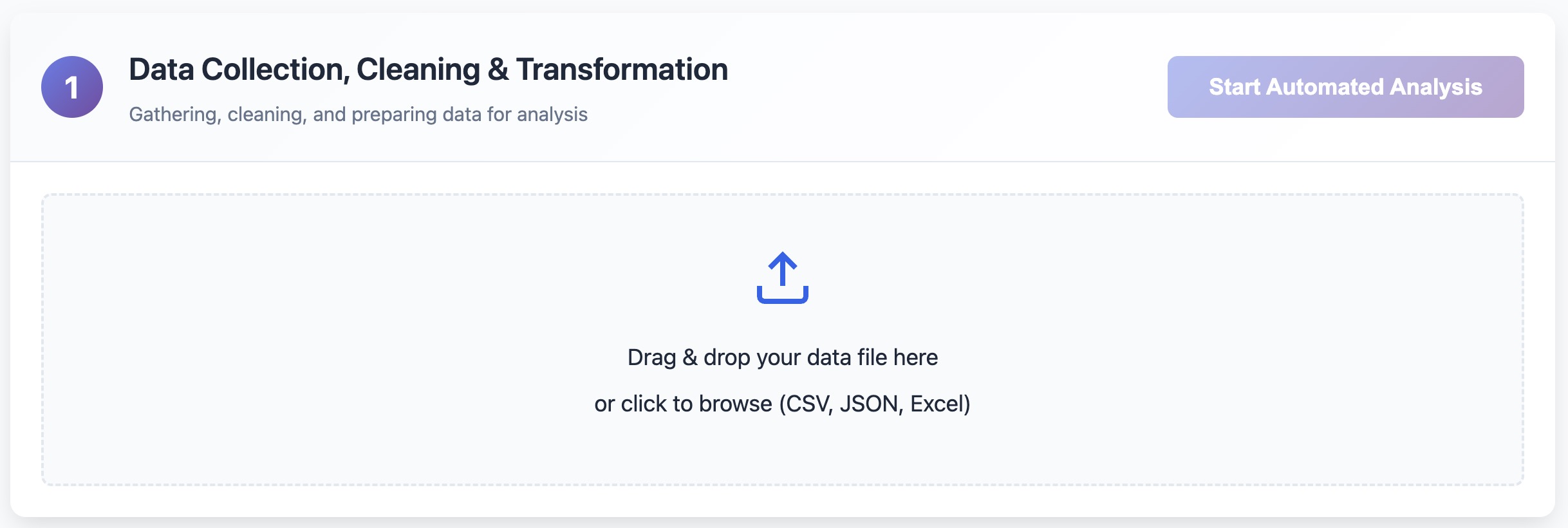
Prior Step 1 — Data upload. Users drag and drop a file (CSV, JSON, or Excel) to begin. The system accepts the raw dataset before any cleaning or analysis.
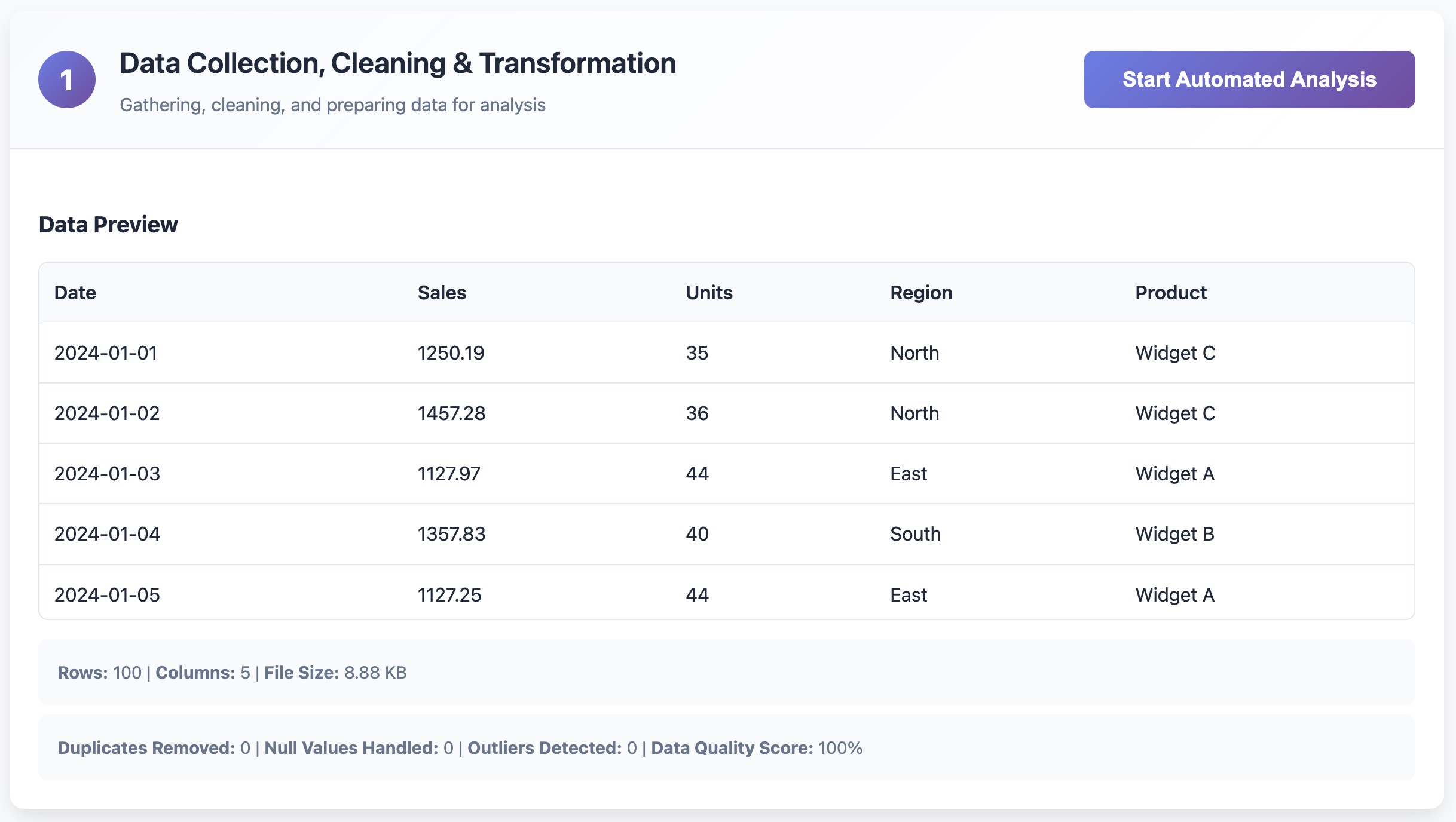
Step 1 — Data collection, cleaning & transformation. Data is gathered, checked for duplicates and nulls, and prepared. A preview and quality score show the dataset is ready for analysis.
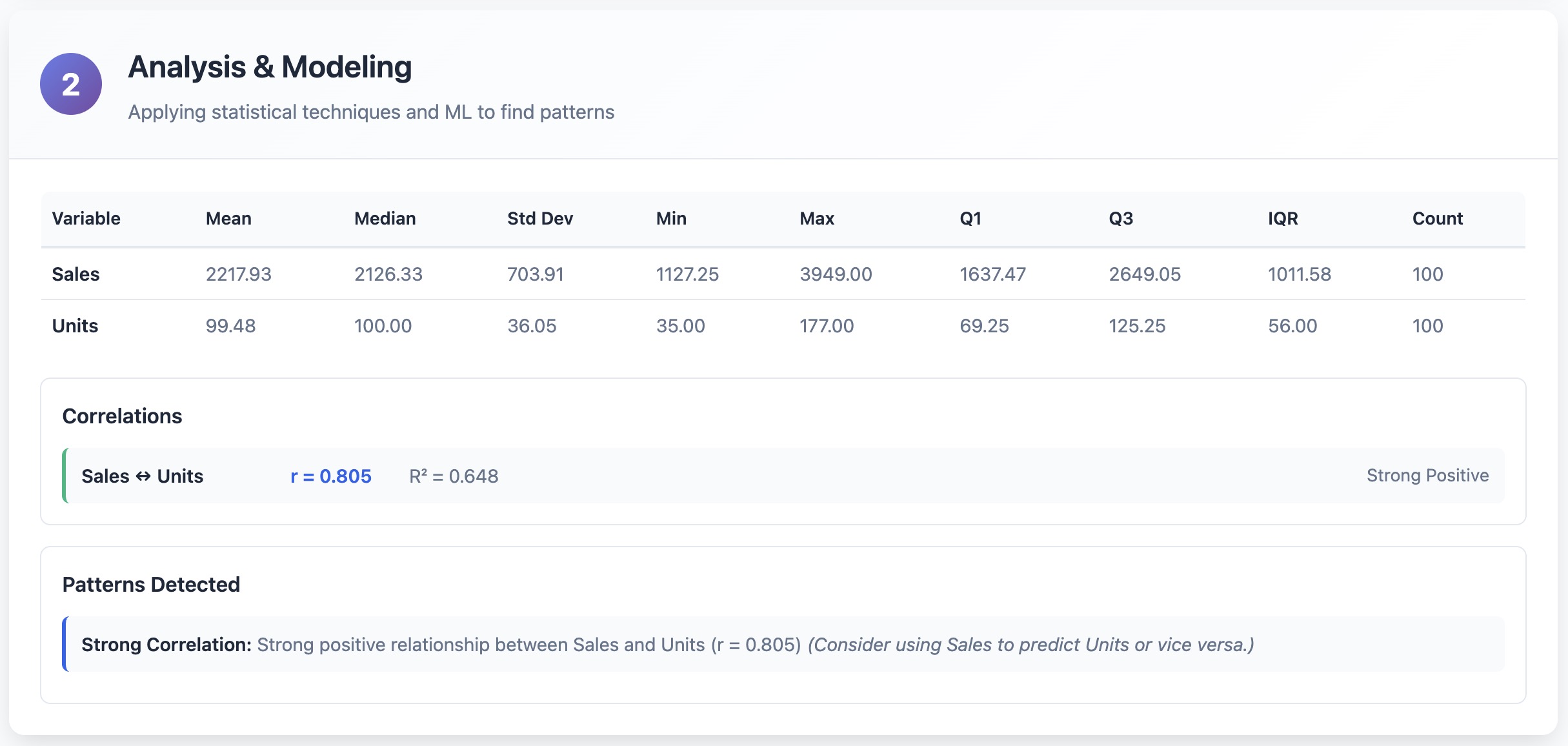
Step 2 — Analysis & modeling. Descriptive statistics and correlations are computed automatically. The system surfaces relationships (e.g., Sales vs Units) and suggests further modeling.
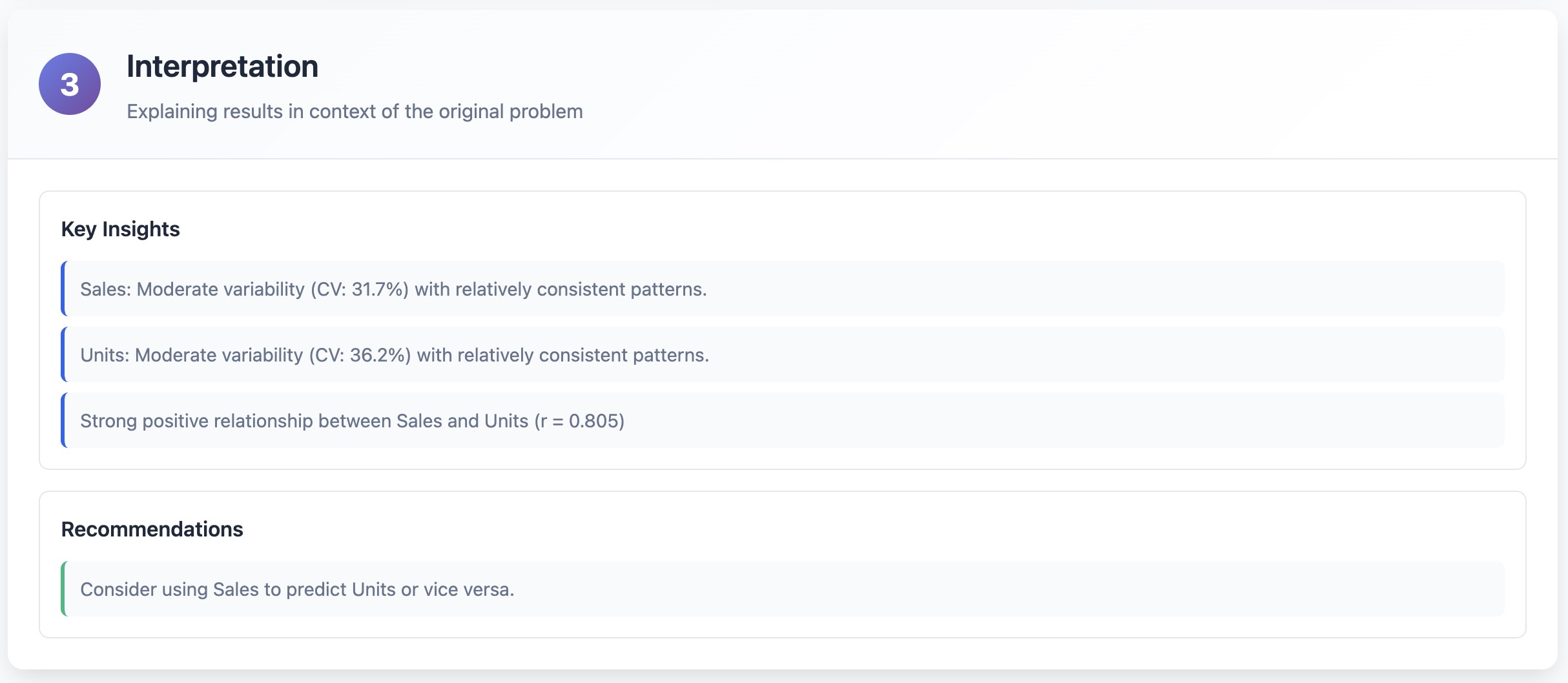
Step 3 — Interpretation. Results are summarized in plain language. Key insights and recommendations are generated so users can act on the findings without deep statistical knowledge.
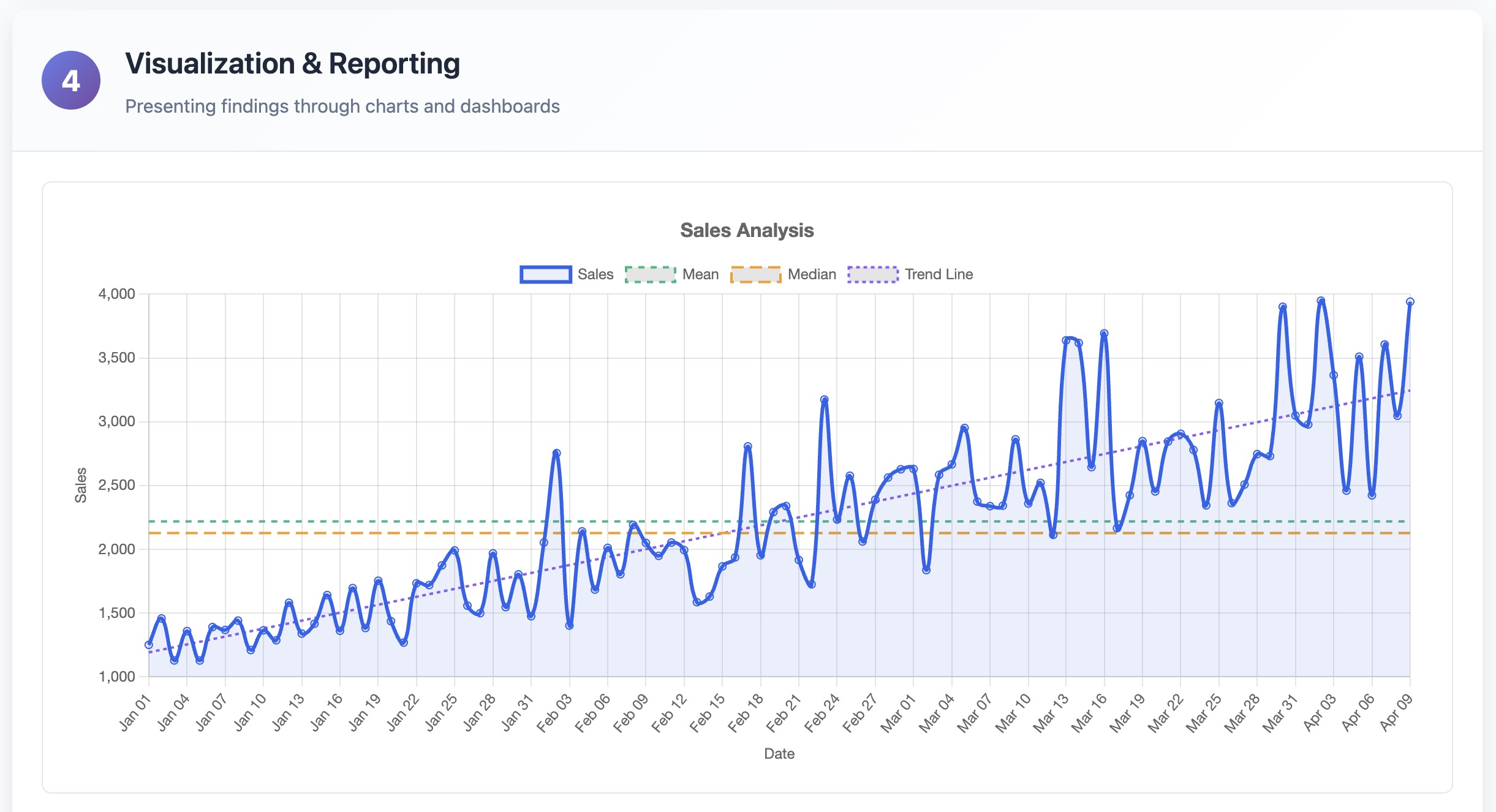
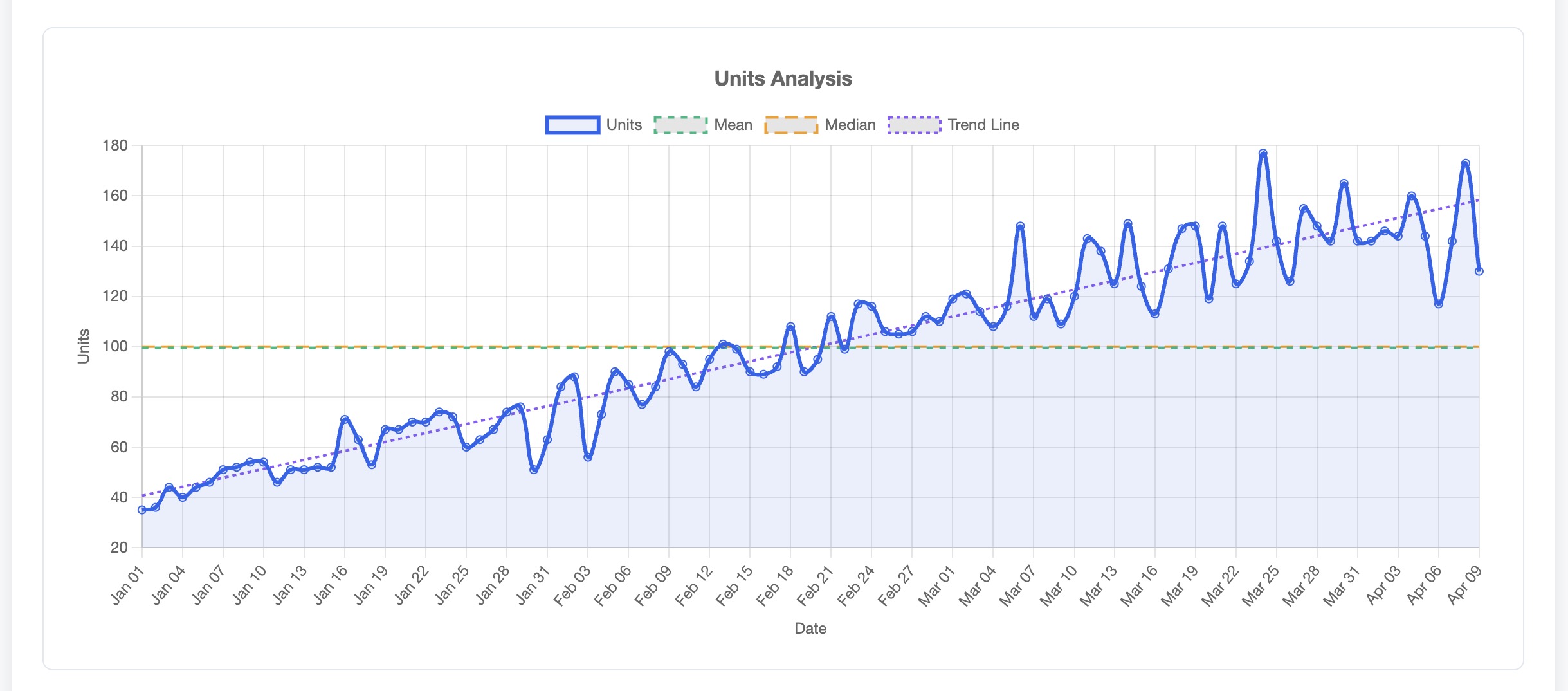
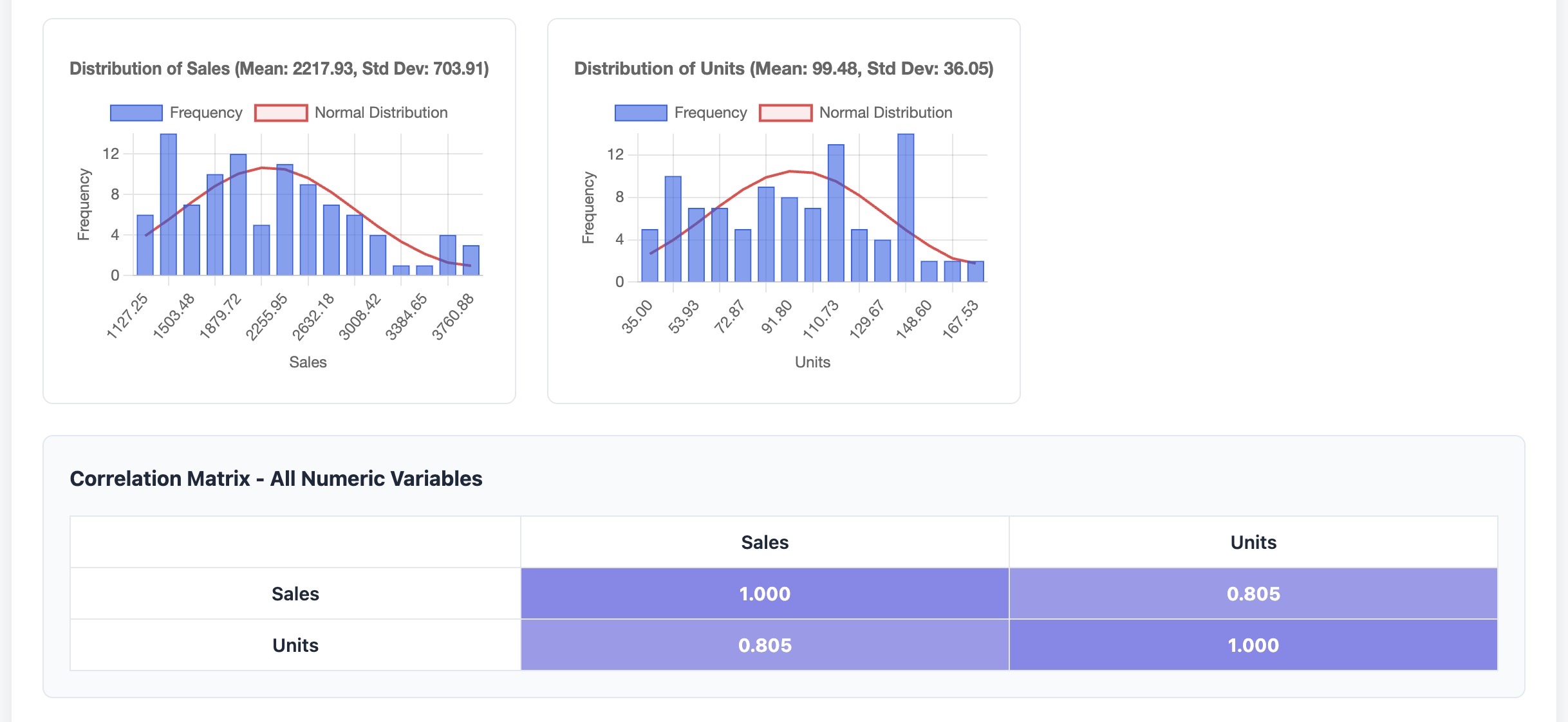
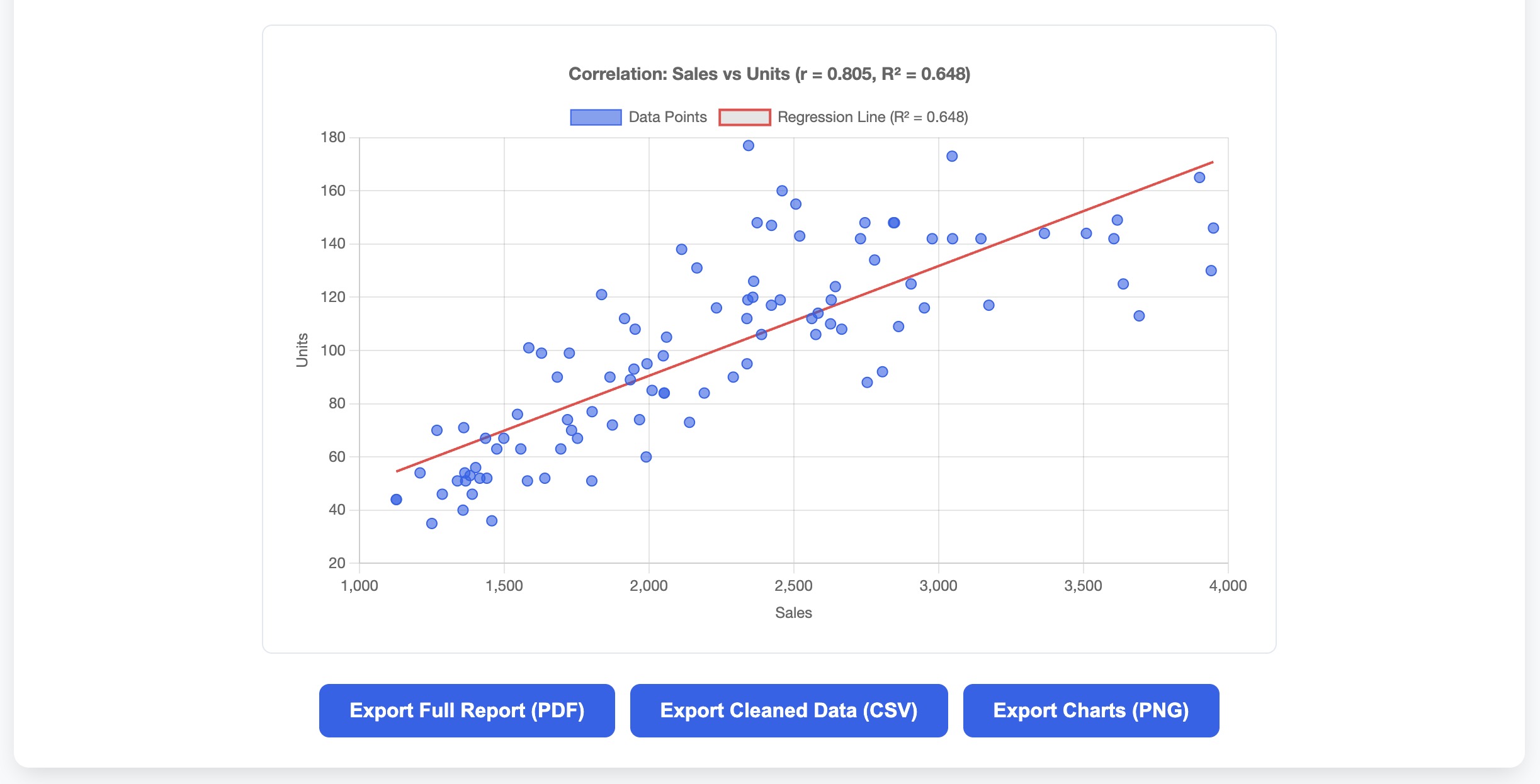
Step 4 — Visualization & reporting. Time series (Sales and Units), distributions with normal curves, a correlation matrix, and a scatter plot with regression line are produced. Users can export reports (PDF), cleaned data (CSV), and charts (PNG).
AI-driven workflow that adapts content, creates influence, and gains traction through triggers, planning, generation, and learning phases.
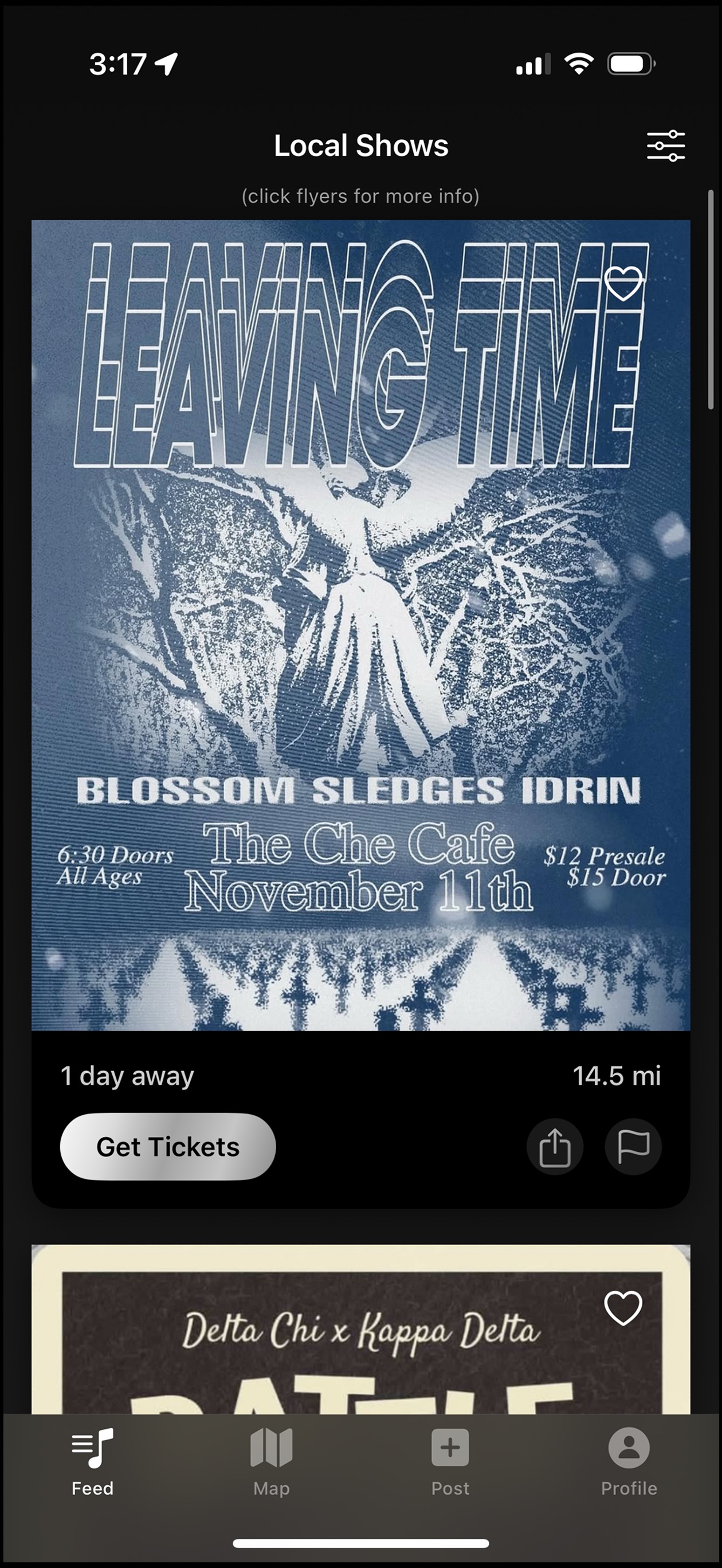
BandHouse began as a project in an entrepreneurship course, where my future co-founder proposed the idea of organizing local shows through a stronger communication platform connecting bands and house venues. The concept aligned closely with my interests, and we moved forward with user research to better understand the problem space. After conducting more than twenty interviews, we identified a consistent pattern: many people wanted to attend more local shows, but often couldn’t find information on the shows at all.
This insight revealed a broader issue with the lack of clear communication between showgoers and hosts. In response, I shifted the application’s focus toward organization and coordination within the local music scene. Rather than relying solely on individual social media accounts to attract attention, BandHouse provides a shared platform where every show and band has equal visibility, regardless of size or following. For audiences, this means easier access to lesser-known events and more reliable weekend planning. For hosts and performers, it offers free access to a broader and more engaged audience.
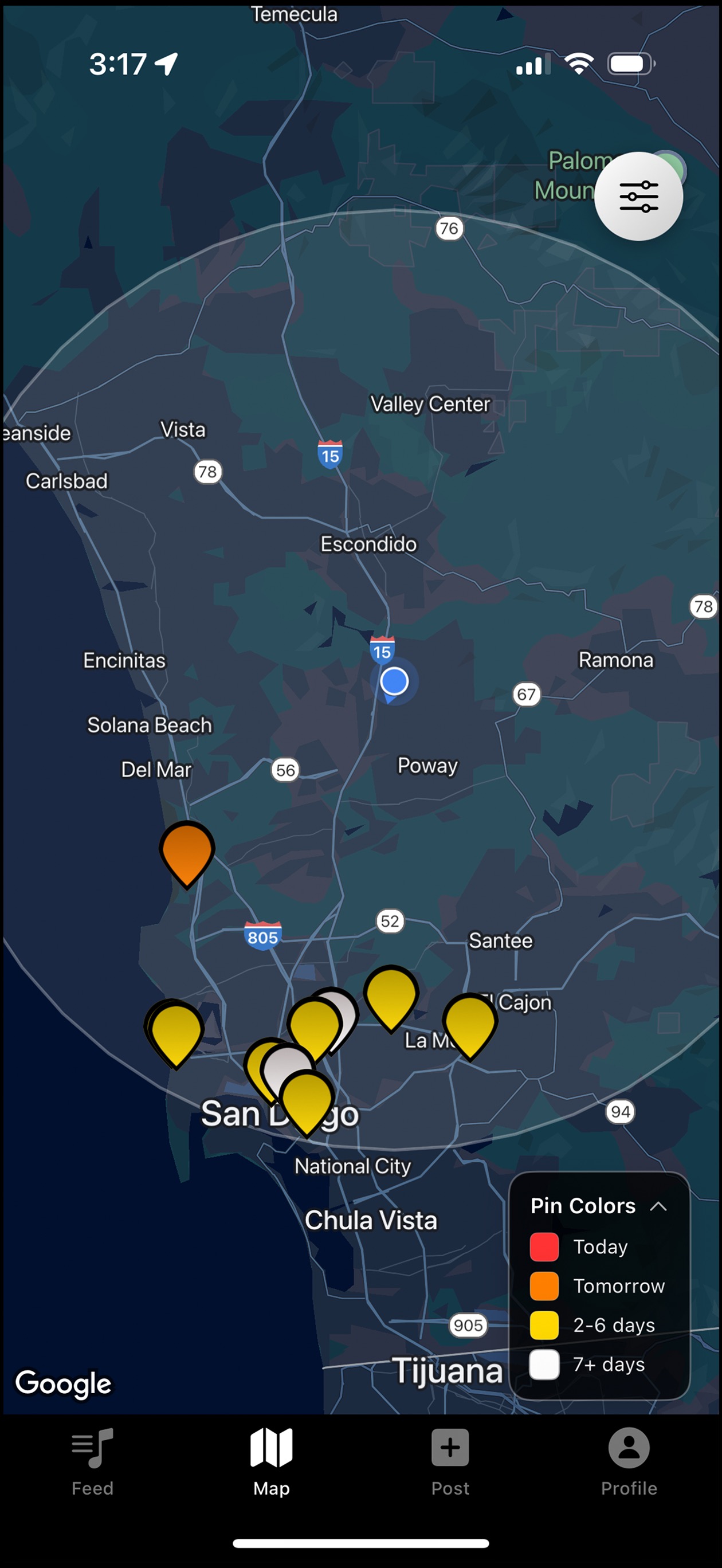
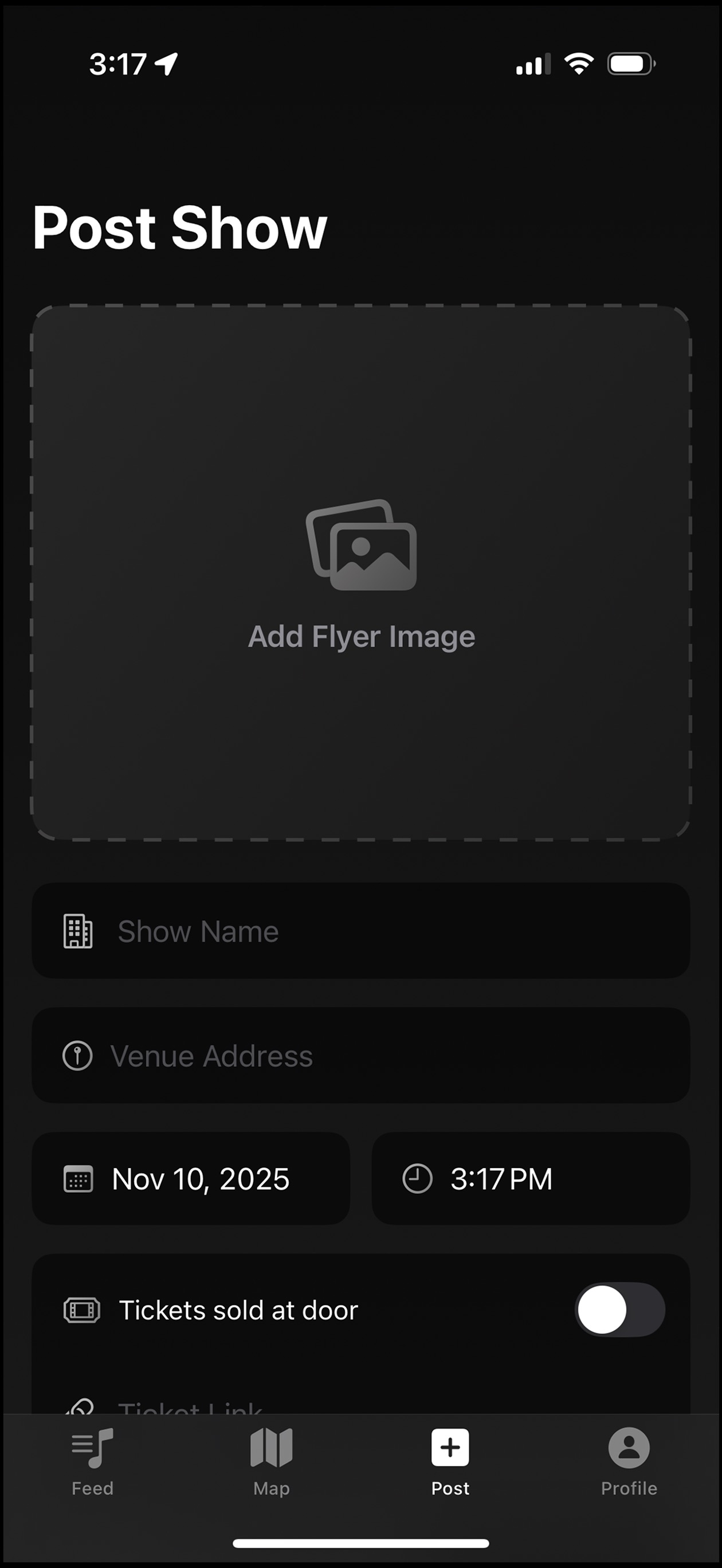
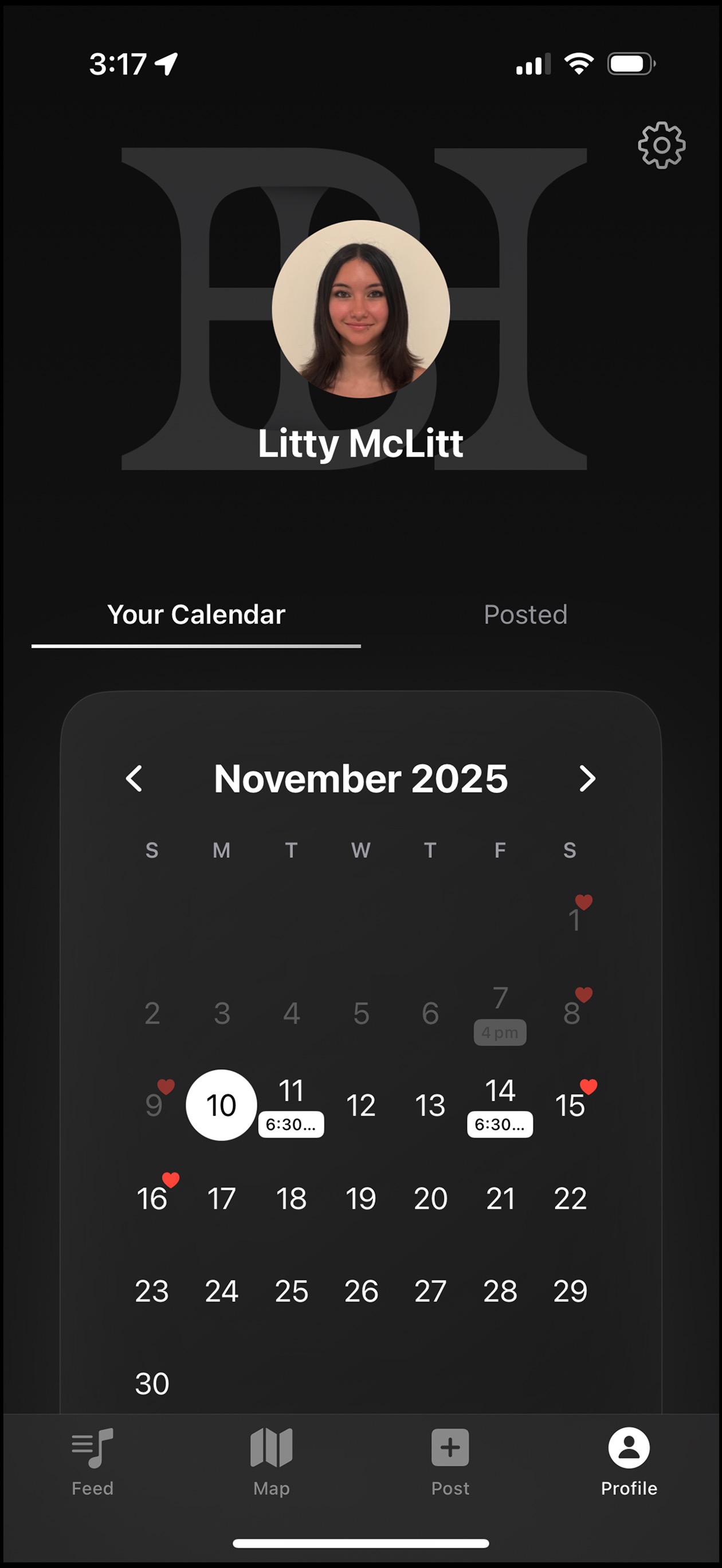
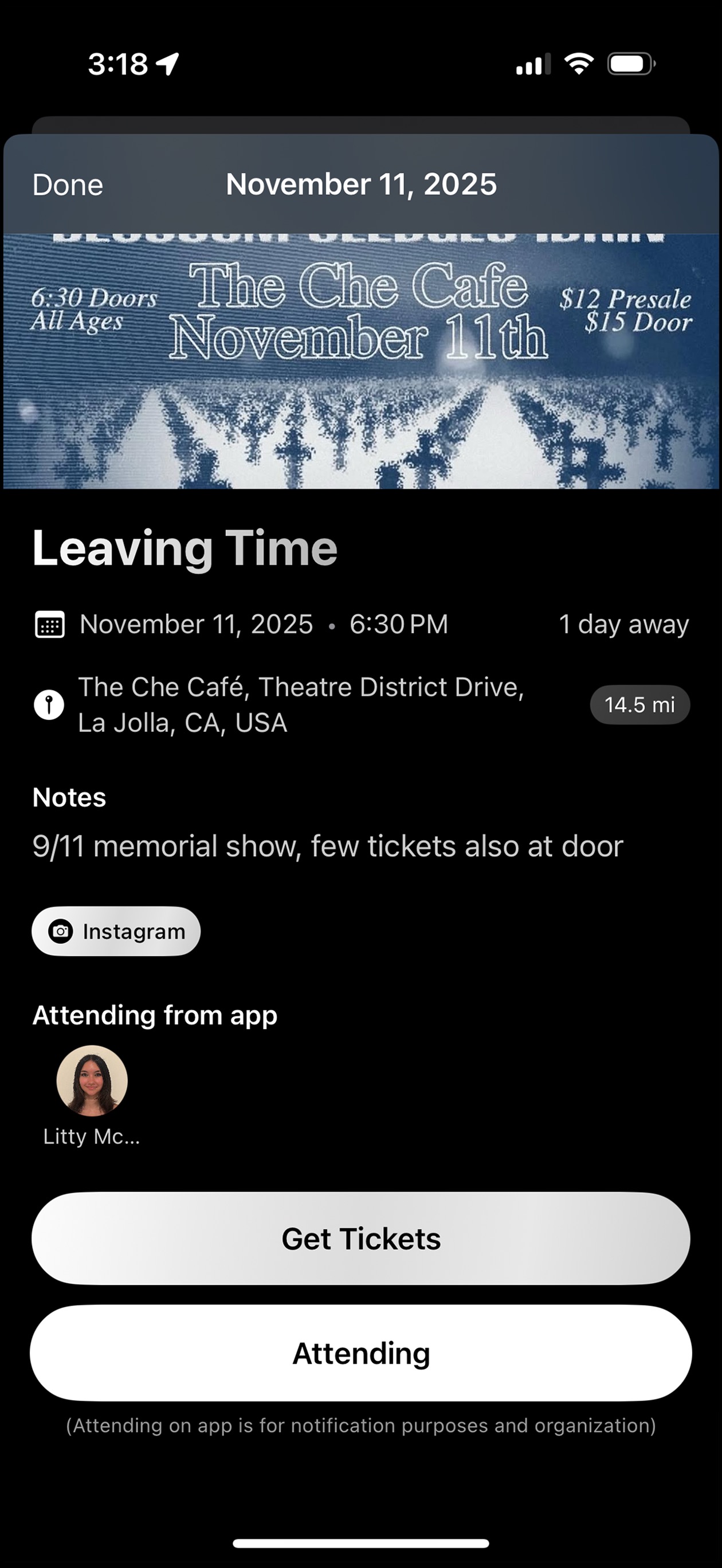
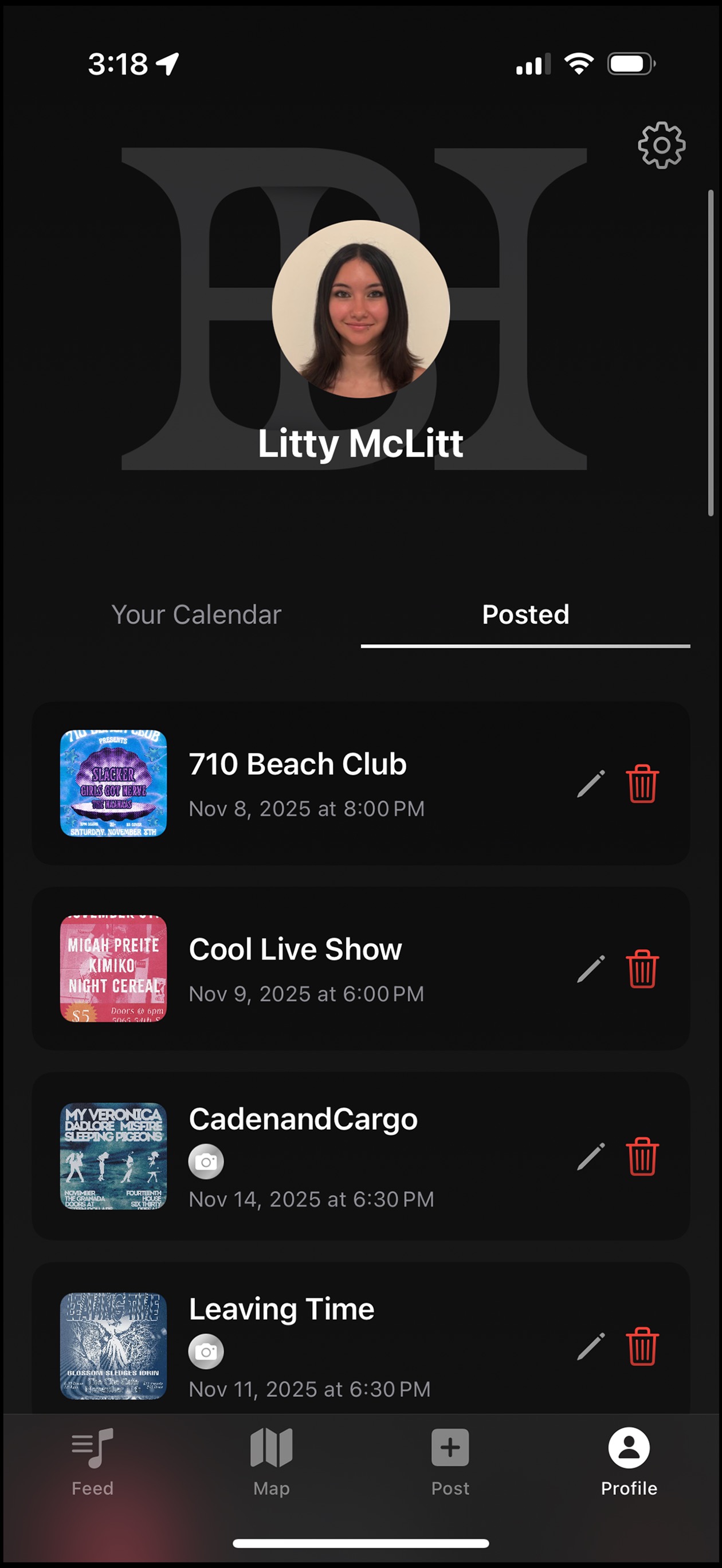
This is a collaborative project with clearly split product and growth responsibilities.
I lead the product and engineering side, handling the full app build from design to deployment. That includes shaping the user experience, developing the iOS frontend, structuring the backend, and creating the visual assets used for in-app and social promotion.
My co-founder leads community growth and live operations. He focuses on getting BandHouse into the local scene by promoting the platform, building relationships with bands and house venues, and organizing live shows that are hosted and sponsored under the BandHouse name.
Many people I spoke with and later interviewed described improving their personal style as overwhelming and difficult to navigate. Most preferred to stay with what they already knew rather than invest time in exploring new aesthetics. Through my own reflection, I reached the same conclusion. Developing a sense of style can be a time-intensive process. I had to seek out specific communities on social media, adjust my algorithm to surface more fashion-focused content, and use Pinterest to organize visual references. The process requires significant time, and the path is often unclear.
This experience led to the creation of PinHaus. I drew inspiration from Pinterest’s success in visual and aesthetic discovery, along with the absence of similar discovery tools in clothing platforms such as Depop, eBay, and Poshmark. By combining these models, I developed a platform centered on moodboards. Moodboards allow micro-trends to be saved, shared, and collected in a structured way. When paired with secondhand fashion, this creates an affordable, community-driven marketplace that keeps trends organized and accessible.
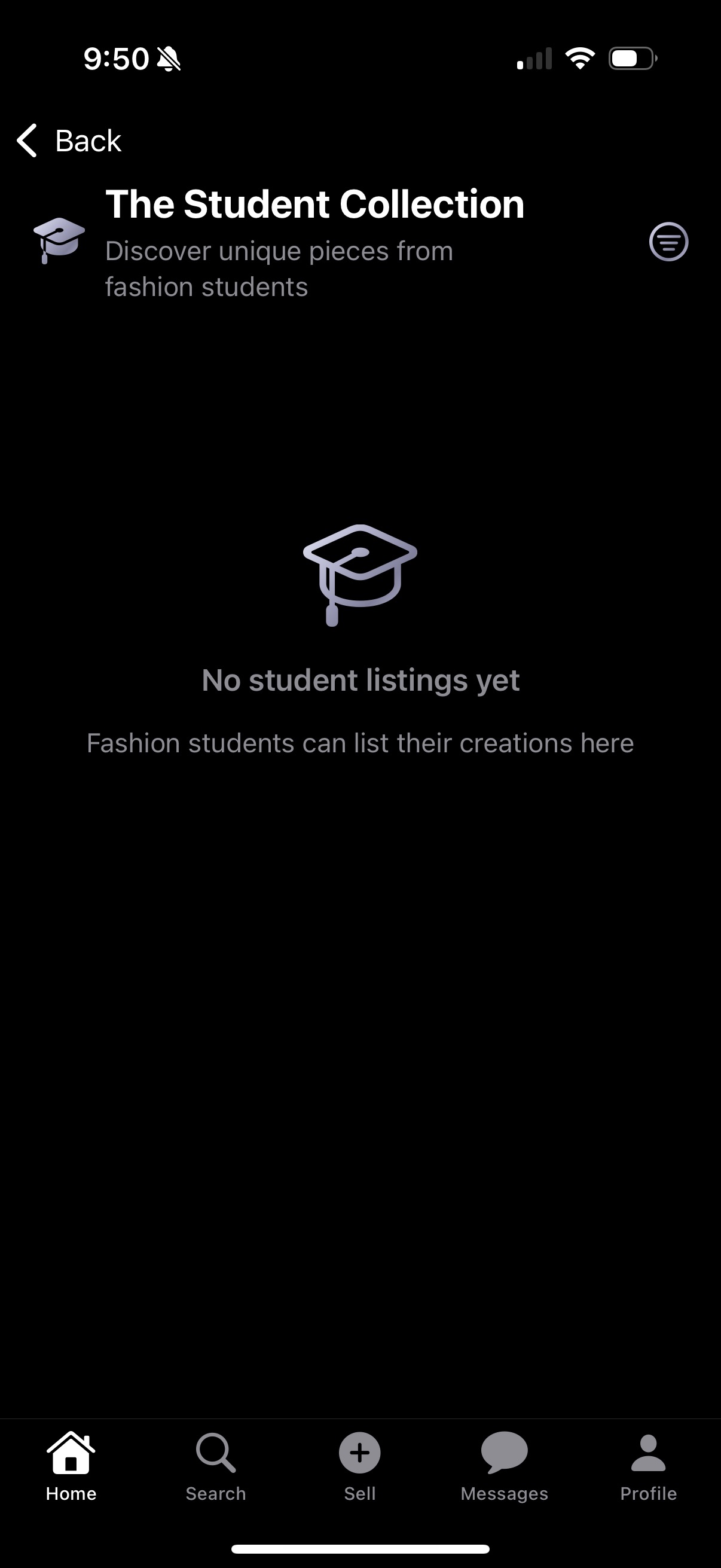
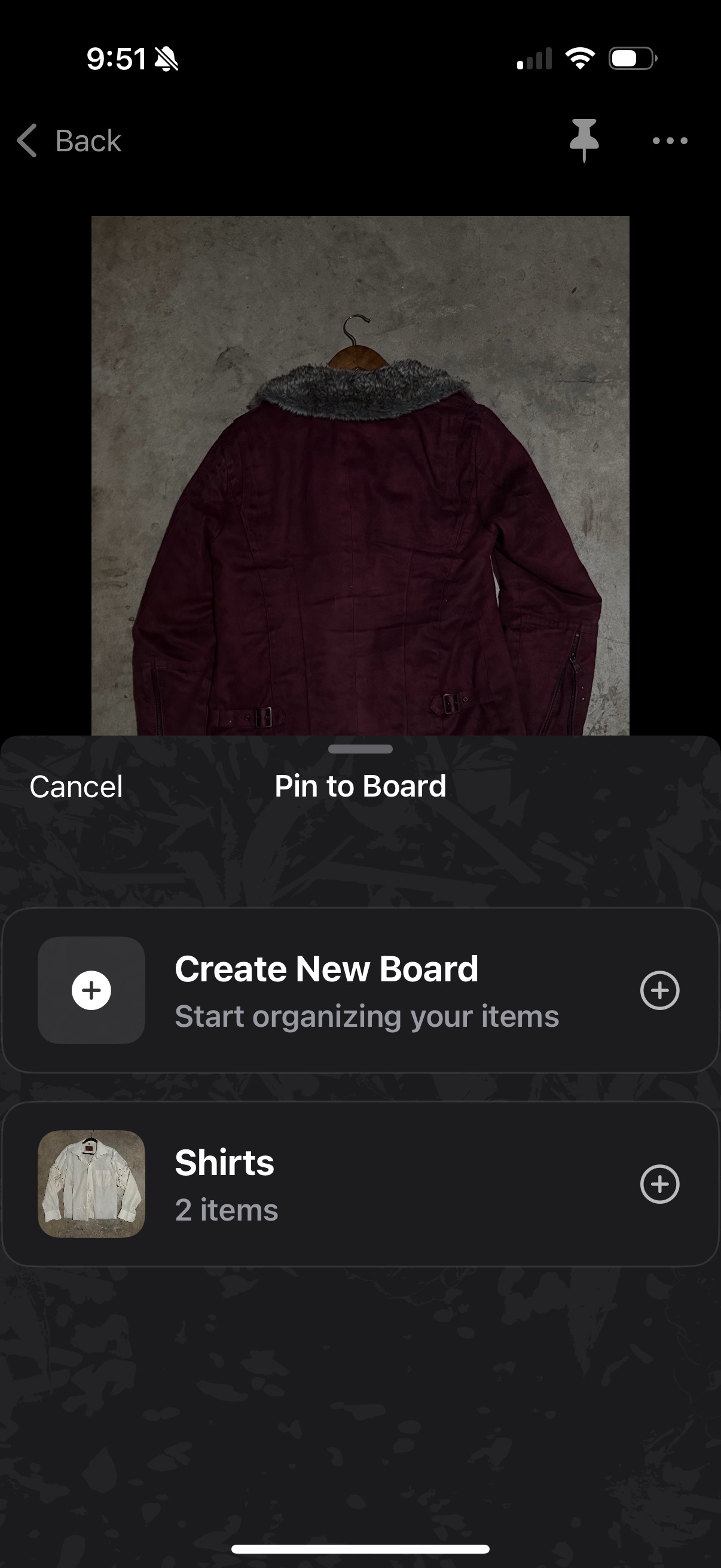
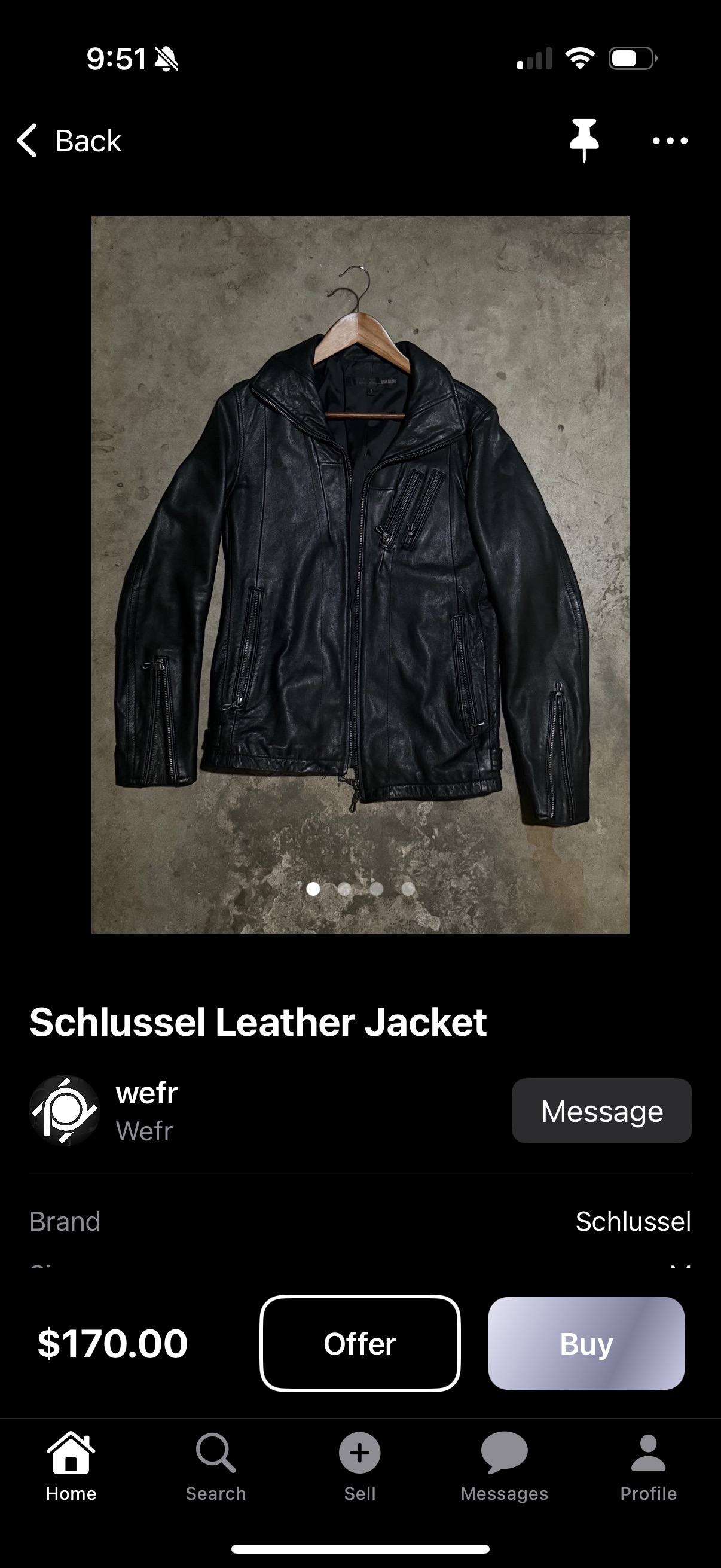
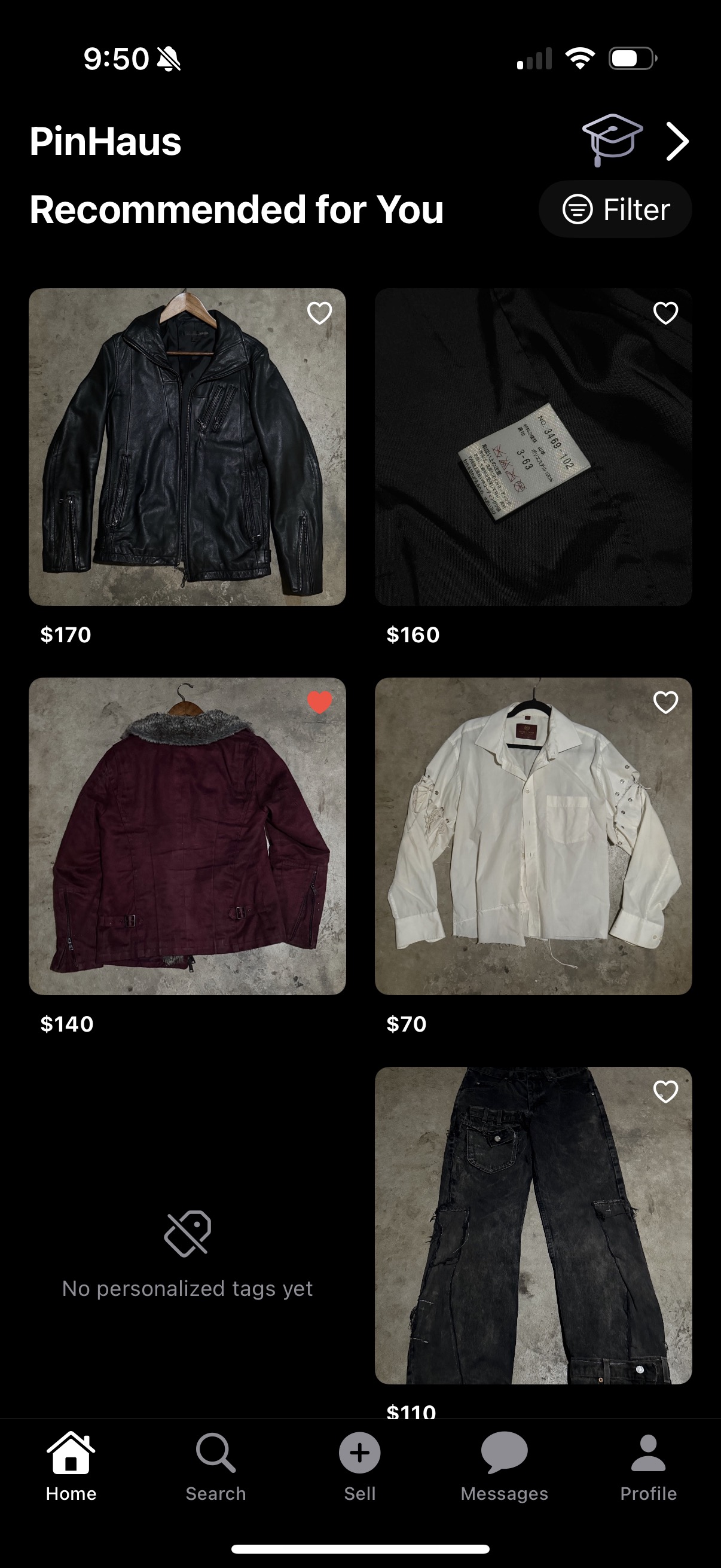
This is a solo project where I handled both product design and engineering:
Automation of color and composition, continuously creating a new art piece every 6 seconds.
Click and drag to spawn ripples of letters. Used as a simple and engaging effect for the PinHaus website.
Drag the mouse over particles to spread the "virus." An infectious flowing flower like pattern emerges.
Noise particles spawned at random points within a contained grid, spreading from force and noise distortion and connected at random. An interpretation of a view into human connection and relationships.
Please wait a second or two to watch these particles glow. A visual representation of blue fireworks in combination with bioluminescent activities.
I'm a product-focused developer and designer based in San Diego, building apps at the intersection of creativity, systems, and real-world communities. I've founded and shipped projects like BandHouse, an iOS platform for discovering and organizing local live music, and PinHaus, a fashion marketplace that blends visual organization with resale and micro-trend tracking.
My background spans traditional art, 3D design, and frontend/mobile engineering, which lets me move from concept to launch across both design and code. I earned a B.S. in Business (Entrepreneurship) with a Minor in Art from San Diego State University. I'm looking to contribute across product, design, and engineering on teams building thoughtful, well-designed digital products.
A San Diego freelance web design studio built to attract clients and convert visitors into leads.
Monoright is the home for my freelance work: hand-coded, mobile-first websites for small businesses across San Diego County. The site showcases services, pricing, and proof of craft while emphasizing speed, local SEO, and direct owner support so prospects can trust the process and reach out quickly.
A product design portfolio that leads with craft, process, and outcomes, not just screenshots.
Curated case-study site showcasing industrial and digital product work end to end: research insights, iteration, prototyping, and shipped results framed for hiring managers and design leads.
A gallery-forward art portfolio where the work stays center stage.
Category-driven collection of traditional and digital pieces with fast browsing, clean hierarchy, and image-first presentation, designed so curators and creative directors can evaluate range and quality at a glance.
The flagship portfolio, one interface unifying product, data, apps, and creative work.
Interactive home experience with seamless in-page navigation, animated transitions, and deep project pages that demonstrate full-stack ownership from research and design through implementation and deployment.
Marketing site for a community iOS platform connecting local bands, house venues, and audiences.
Clear product story and App Store funnel for a live-music discovery app born from 20+ user interviews, positioning BandHouse as infrastructure for grassroots scenes, not just another social feed.
Landing experience for a moodboard-driven fashion marketplace and iOS app.
Brand-forward site introducing PinHaus's visual discovery model, where micro-trends, secondhand resale, and board-based curation meet, with interactive creative-coding accents that mirror the product's personality.